
Reviewed · SCENIC RAILWAY TOURS
St. Kitts Scenic Train Experience
The most unusual thing about this St. Kitts excursion is that it combines a slow historic train ride with a guided bus trip, giving you two very different views of the island. The railway once carried sugarcane from plantations to the factory, and today its restored cars roll past villages, farms, rainforest, and the Atlantic coast.
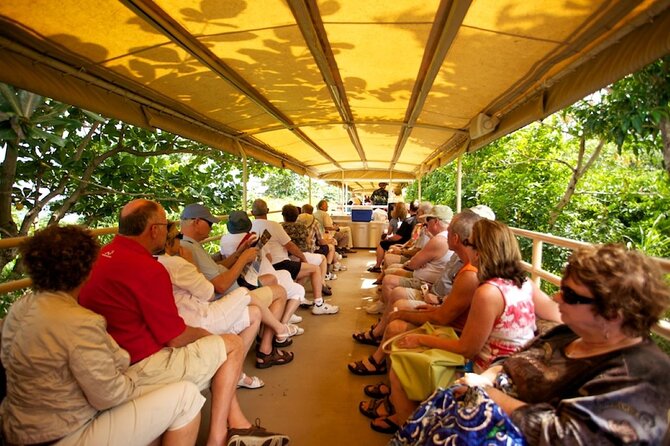
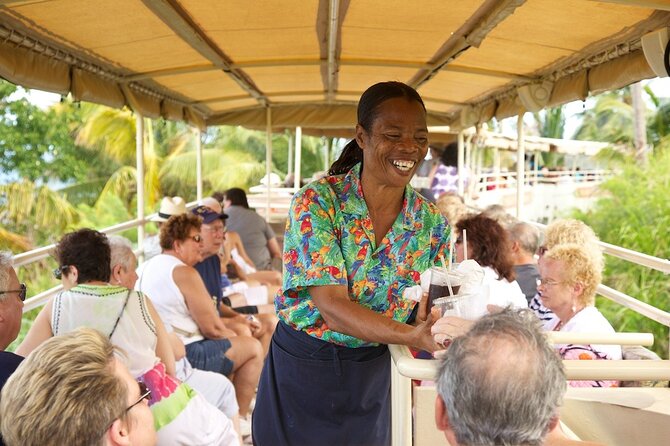
I like the open-air upper deck, where the sea breeze helps with the tropical heat, and I like the easygoing onboard service, with rum drinks, fruit punch, Caribbean music, and commentary about St. Kitts. The main drawback is the rough, rocking ride, along with occasional delays, crowded seating, and confusing transfers back to the cruise port.
Key points to know before you book
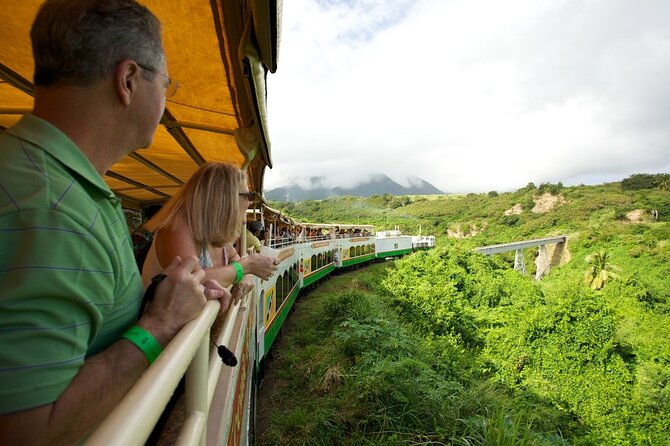
- A former sugar railway: The narrow-gauge line was built between 1912 and 1926 to move sugarcane to the factory.
- Rail and bus in one outing: The bus ride can take close to an hour, but it adds commentary and views the train cannot reach.
- Two train levels: The upper deck is open to the air, while the lower deck has air-conditioning.
- Expect a lively onboard mood: Rum drinks, fruit punch, music, dancing, and island stories are part of the experience.
- The train is rough and slow: Motion sickness, heat, and long periods of similar scenery are genuine concerns.
- Plan for about three and a half hours: Delays can stretch the outing, so cruise passengers should leave a generous buffer.
Why the old sugar train is worth seeing
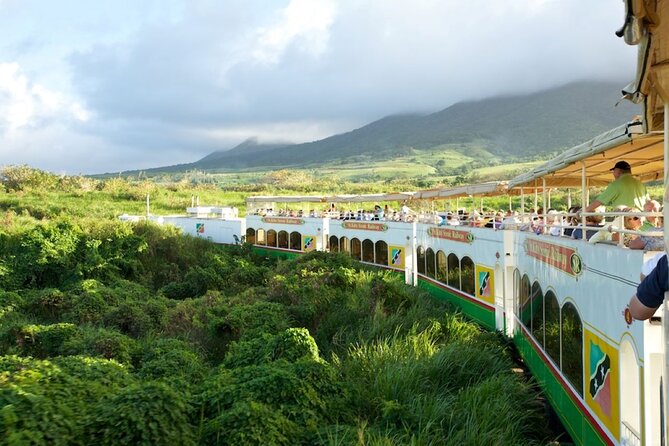
St. Kitts’ railway is more than a scenic ride. It tells the story of an island once shaped by sugar plantations, mills, and the hard work of moving cane across difficult ground.
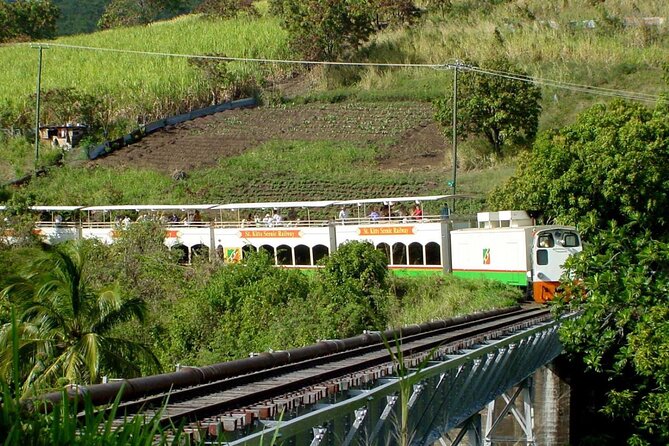
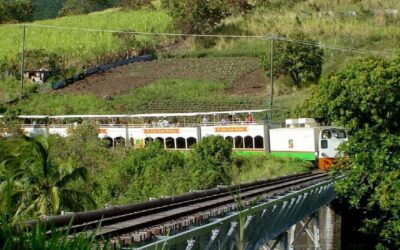
The line was built in stages from 1912 to 1926. Its original job was practical: bring sugarcane from the fields to the central factory. The railway no longer serves that purpose, but the route gives you a close look at the villages, farms, hills, and coast that shaped island life.
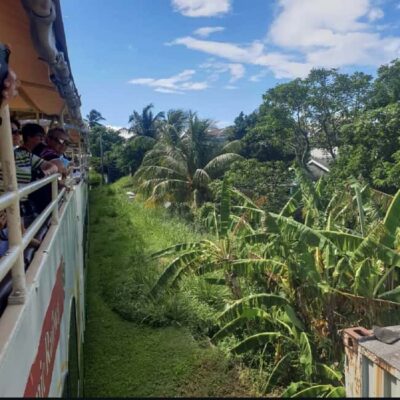
I like this kind of sightseeing because the train moves slowly enough for you to notice details. You may see small homes, grazing livestock, farm plots, tropical plants, and stretches of coastline that disappear quickly from a car window. The ride is not polished like a modern rail attraction. Its rocking motion and old-fashioned feel are part of the character, though they can also become tiring.
The experience costs $135 per person. That is a serious price for a three-and-a-half-hour outing, so value depends on what you want. You are paying for transportation, narration, drinks, music, the train, and a broad look at the island rather than a single historic site. If you want a quiet, tightly scheduled rail journey, the cost may feel high. If you want a social island tour with a strong sense of place, it can make sense.
More rides on the sugar train:
- Sugar Train Tour & Drinks|Pick-Up &Drop Off From Cruise Port
★ 4.1 · 148 reviews - St Kitts Scenic Train Tour (Hotel or Ship)
★ 3.5 · 135 reviews - Saint Kitts Train Trek
★ 4.0 · 60 reviews
The bus ride sets the stage
The day begins with pickup, often near the cruise port, followed by a bus transfer to the railway. This part can take close to an hour and is easy to underestimate when planning your day.
The bus is not just a shuttle. A good driver turns the ride into a running introduction to St. Kitts, explaining local history, plants, trees, traditions, and places along the road. Drivers named Shawn and Mr. Rogers are singled out in the tour material as especially memorable guides, although the exact driver depends on the day.
This first leg also gives you a useful look at the island’s urban and rural sides before you board the train. You may pass through built-up areas, farming country, and smaller settlements. The bus therefore adds context that the railway alone cannot provide.
The weak point is organization. Pickup times have not always matched the actual departure, and some passengers have waited after arriving. You should follow the stated meeting time carefully, arrive early, and ask clearly where you will meet the return bus. The trip back to the cruise port has caused confusion for some passengers, and the available space on return buses may need clarification.
Choose your train deck carefully
The train has two levels, and your choice affects the whole outing.
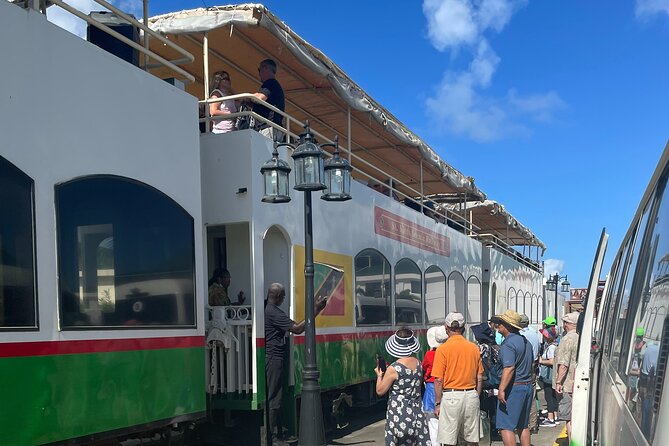
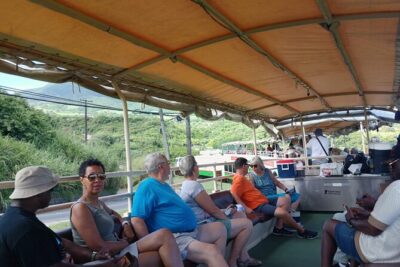
The upper deck is open-air, with wide views and a pleasant breeze. It is the best place for photographs and for watching the coast, villages, and mountain slopes pass by. The open sides also help when the sun is strong, though wind can be an issue.
The lower level is enclosed and air-conditioned. It makes more sense if you are sensitive to heat or prefer a protected seat. You will give up some of the broad views, but the cooler setting may make the ride easier.
Seating can become tight, especially upstairs. The train has operated with as many as 150 people, and crowded sections make it harder to turn around, take photographs, or keep a comfortable personal space. If the upper deck is important to you, get there early and settle in before the best seats fill.
The railway is also loud and unsteady. The cars rock from side to side, and some stretches are notably rough. If you get motion sickness, take precautions before boarding. This is not a smooth commuter train. The movement is part of the old railway experience, but it is a real limitation for some people.
Mount Liamuiga gives the ride its dramatic backdrop
As the train moves through the interior, Mount Liamuiga becomes one of the major sights. The dormant volcano rises to 3,792 feet, or 1,156 meters, and its wooded slopes dominate the island’s center.
The mountain provides the kind of broad view that makes the upper deck worthwhile. Depending on the weather, you may see its summit clearly or watch clouds gather around the higher slopes. The train’s slow pace gives you time to take in the change from cultivated land to thicker tropical growth.
The onboard commentary adds meaning to the view. You are not simply looking at a mountain. You are hearing about the island’s geography, settlements, and past, which helps connect the scenery to daily life on St. Kitts.
Still, the scenery is not constantly dramatic. Some stretches repeat the same combination of fields, trees, and distant sea. Passengers seeking nonstop sights may grow bored, especially if the train is delayed. I would treat this as a relaxed viewing experience, not a packed sightseeing schedule.
Same island, a completely different kind of day:
- Full Island Panoramic Tour of St Kitts
★ 4.5 · 582 reviews - The Grand Tour of St. Kitts
★ 5.0 · 552 reviews - St.Kitts See It All The Local Behind The Scenes Tour Of St. Kitts
★ 5.0 · 526 reviews - ATV Tour of St Kitts
★ 5.0 · 407 reviews
Dieppe Bay shows the Atlantic side
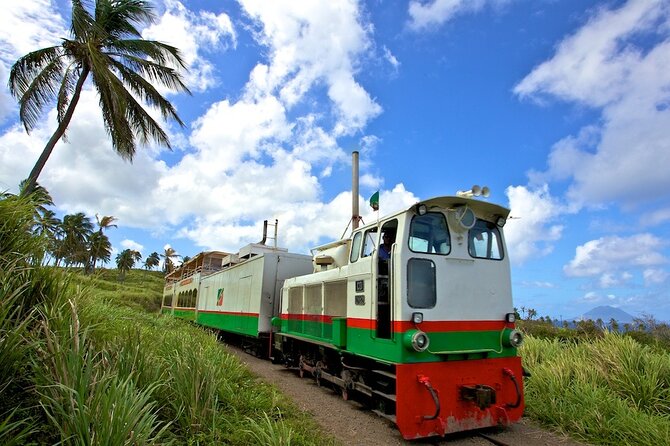
The train continues toward Dieppe Bay, a fishing village on the Atlantic side of St. Kitts. This is a useful contrast to the more familiar cruise-port view of the island.
The coast here is tied to small-scale fishing. The commentary may explain local work with conch and fish, while the train gives you a passing view of the village and shoreline. You will not be stopping for a long visit, so think of Dieppe Bay as part of the moving panorama rather than a walking stop.
This section also shows why rail and bus work well together. From the train, you see the coast at a leisurely pace. From the bus, you get more direct views of roads, homes, and inland areas. Each mode fills in a different part of the picture.
Sandy Point Town brings a village view
Sandy Point Town sits on the northwest coast and offers a glimpse of traditional Caribbean architecture and local life. The train passes through rather than turning the village into a formal walking tour.
That is both the charm and the limit. You can watch the town unfold from your seat, but you will not have much time to explore individual buildings or speak with residents. The value is in seeing how the island’s communities fit into the wider route.
For photographs, keep your camera ready. The train moves slowly, but the best angle can pass quickly. The open-air deck gives you a better chance of capturing homes, vegetation, and distant sea views without glass between you and the subject.
Wingfield Estate connects the train to sugar
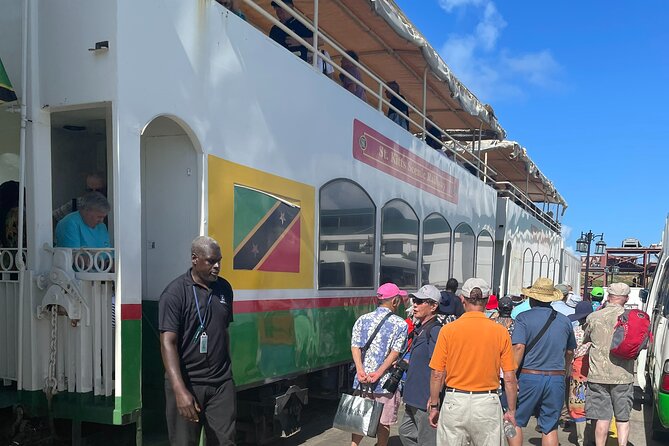
Near Wingfield Estate, the route passes a former sugar plantation dating to the 17th century. Ruins of the old sugar factory help explain why the railway exists at all.
This is one of the most meaningful parts of the trip because it links the scenery to St. Kitts’ economic past. Fields and plantation buildings were once part of a working system, and the railway was built to serve that system. The remains near Wingfield Estate make the old sugar industry easier to picture.
The train or bus slows in the area, giving you a better chance to see the ruins. Still, this is primarily a passing view, not a full plantation tour. If you want detailed architecture, museum displays, or a long guided visit, you may need a separate experience.
Basseterre closes the loop
The final approach brings you into Basseterre from the west. You may see city buildings and historic landmarks before the bus drops you near the cruise port if you arrived by ship.
This return section gives the excursion a useful ending. You have moved from rural roads and mountain views back into the island’s main city, seeing how the small communities connect with the capital.
Allow extra time here. Delays during pickup, boarding, mechanical problems, or the transfer back can make the total outing longer than the advertised three and a half hours. If your ship departs the same day, confirm the return plan before you leave the train and keep your schedule flexible.
Drinks, music, and dancing change the mood
The onboard service helps make this more than a silent sightseeing trip. Daiquiris and fruit punch are served, and the tour includes Caribbean music, live commentary, and dancing on some departures. The first drink may be free, with additional rum drinks available during the ride.
This creates a party atmosphere. If you want a social outing with music and drinks, it adds a lot to the price. If you prefer quiet observation, the activity may feel too lively.
The crew’s service is an important part of the experience. A server known as The G has been praised for handling drink service while the train rocks and sways. The onboard guide provides facts about the island, though the quality and clarity of the microphone commentary can vary.
The drinks should not be treated as a cure for motion sickness. The track is rough, and alcohol can make some people feel worse. Eat beforehand or bring snacks, since the trip can feel long and drinks are not a substitute for food.
What can go wrong, and how to plan around it
The biggest practical concern is reliability. Mechanical trouble has caused long waits and, in some cases, cancellations. Weather can also affect departures, and the tour requires a minimum number of participants.
That does not mean every outing will have trouble. It does mean you should not schedule a tight activity immediately afterward. Cruise passengers should book an early departure when possible, confirm pickup instructions, and leave enough time to return to the ship.
The tour operator offers free cancellation up to 24 hours before the start time. Cancellations inside 24 hours are not refundable, and changes during that period are not accepted. If poor weather or an insufficient number of participants cancels the tour, you should be offered another date or a refund.
The experience can take up to 150 people, so expect a group setting rather than a private island tour. Most participants can take part, but the rough motion, long sitting time, heat, and crowded seating matter if you have mobility or comfort concerns.
Who will enjoy this St. Kitts train ride
I would recommend this excursion to you if you:
- Like historic railways and old-fashioned transportation
- Want broad views of St. Kitts without arranging several separate tours
- Enjoy music, drinks, dancing, and a social atmosphere
- Appreciate guides who explain local history and daily life
- Can handle a slow, rough, rocking train ride
- Have enough time in port for delays
I would be more cautious if you:
- Get motion sickness easily
- Need a quiet or highly organized tour
- Expect dramatic scenery every minute
- Have a strict schedule after the excursion
- Dislike crowded seating or strong sun
- Want a detailed visit inside historic buildings
The strongest parts are the open-air views, the sense of traveling through real communities, the sugar-industry connection, and the bus guides who add local detail. The weakest parts are comfort, consistency, and time management.
Should you book it?
Book this St. Kitts Scenic Train Experience if you want a relaxed, social way to see several sides of the island and you enjoy the idea of an old sugar railway more than a polished modern attraction. Choose the upper deck for views, arrive early, bring snacks, prepare for a rough ride, and confirm how you will get back to the port.
Skip it if you are prone to motion sickness, have only a narrow window before your ship leaves, or want a short list of major sights with little downtime. At $135, the tour earns its value through the combination of rail, bus, drinks, music, and commentary. It is not the best choice for everyone, but for the right passenger, it offers a memorable look at St. Kitts beyond Basseterre.
FAQ
How long does the St. Kitts Scenic Train Experience last?
The advertised duration is approximately three hours and 30 minutes. Delays, boarding waits, or mechanical problems can make the total outing longer.
How much does the experience cost?
The listed price is $135 per person.
Does the tour include pickup?
Yes. Pickup is offered, including pickup and return arrangements connected with the cruise port.
Is the train air-conditioned?
The lower level is enclosed and air-conditioned. The upper level is open-air.
Is the upper deck a good choice?
The upper deck gives you the broadest views and a sea breeze, but it can be sunny, windy, crowded, and more exposed to the train’s rocking motion.
What kind of train is used?
It is a restored narrow-gauge railway originally built to carry sugarcane from plantations to the sugar factory.
Does the experience include a bus ride?
Yes. The excursion combines a train journey with bus transportation. The bus ride to the train can take close to an hour.
Are drinks included?
Daiquiris and fruit punches are served during the experience. Some departures include a first free drink and additional rum drinks.
Can children participate?
Most people can participate, according to the tour information. The ride is long, rough, and sometimes hot, so families should plan for those conditions.
What happens if the tour is canceled?
If poor weather or an insufficient number of participants causes cancellation, you should be offered another date or a full refund. You can cancel for a full refund up to 24 hours before the start time.
Just added around St Kitts
- Two Islands One Paradise★ 4.8 · 3 reviews
- Yoga Classes with Sound Therapy Included★ 5.0 · 4 reviews
- Two islands, One paradise★ 5.0 · 5 reviews
- Mount Liamuiga Volcano Tours★ 3.5 · 8 reviews
- St.Kitts Sea Glass & Volcanic Black Sand Beach Day★ 5.0 · 7 reviews
- St.Kitts Sugar Train Tour / Pick up & Drop-Off Included★ 4.5 · 6 reviews
- Tour de Force: Port Zante and Historic Downtown Basseterre★ 4.5 · 3 reviews
- St Kitts Volcano Hiking and Sightseeing Excursion★ 3.5 · 9 reviews
Scenic Railway Tours, compared.
Sugar Train Tour & Drinks|Pick-Up &Drop Off From Cruise Port
Read our review →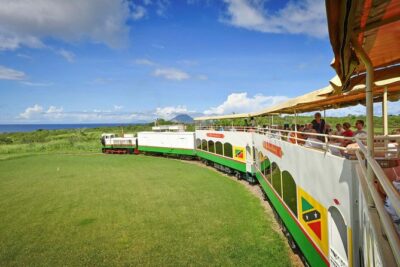
St. Kitts : Sugar Train with Pick Up & Drop-Off & Drinks
Read our review →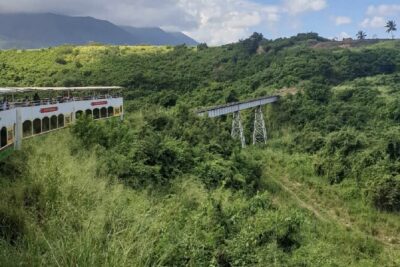
St.Kitts Sugar Train Tour / Pick up & Drop-Off Included
Read our review →Browse the lists this tour appears in